
While developing a concept here in London to open in early 2016, my business partner insisted on a Feng Shui Master to come and evaluate the site we have found in Wardour Street, Soho, London. Although I have yet to consider Feng Shui in previous restaurant concepts I have developed, the thought of having some advice on flows and energies sounded intriguing. Having put more thought into it, I considered that I must look at it as energy, flow, and even psychology. Colours and feelings people have that offer warmth and a sense of comfort. With a Taiwanese wife, the whole thought of ancient Chinese traditions and beliefs was no real shock to the system.
The title probably caused a few raised eyebrows. Of course, we all know that Feng Shui is used in homes and apartments to improve positive energy and create a more comfortable atmosphere in the living space, but what does that have to do with a restaurant?
Here are some points to consider next time you build a restaurant from the research over the past weeks.
Feng Shui is an ancient Chinese art that uses aesthetics to improve the positive energy, or chi, in a space. It tries to bring harmony and balance to an area by using colours, décor, wholesome forms, locations, visuals, and furniture placement.
Even though we mainly connect Feng Shui with private homes, any place where people spend time can benefit from the calming effects of this ancient Chinese art. Restaurants, in particular, with their significant traffic of clients, can benefit from implementing a few Feng Shui ideas while decorating and designing the interior.
The following tips list things to remember when implementing Feng Shui ideas in your restaurant. In the next posts, we will go into deeper details about some ideas.
Colours:
The different colours of the rainbow all have different meanings, and we all react to them in different ways. Certain colours will evoke specific emotions or thoughts when seen.
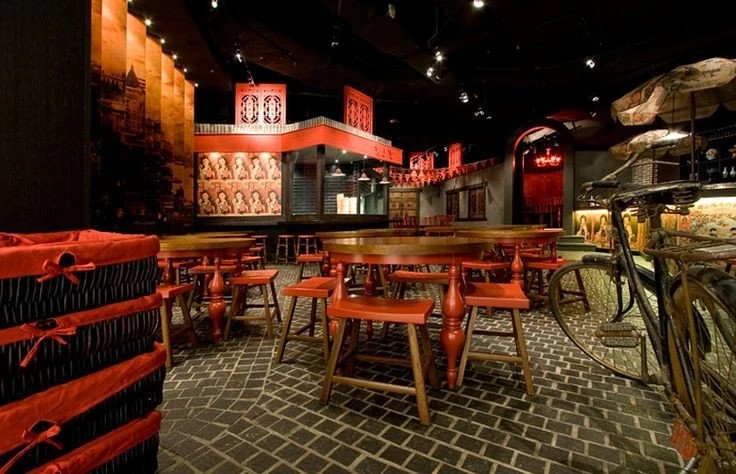
Red is a colour that excites passion and love and increases appetites. It creates feelings of romance and sometimes lusts. Pink is a calm, soothing colour that is also associated with love. Yellow is a cheery colour that promotes warmth and happiness. However, prolonged exposure to yellow can cause anxiety. (This is why fast food restaurants use red and yellow decorations and logos. This causes people to eat more but leave faster, thus promoting a more considerable turnover.) Orange strengthens concentration and gives people a creative boost. Blue is a calming colour that reflects peace, healing, trust, intellect, and wisdom. Black is not a colour associated with depression—it promotes feelings of power, sophistication, modernism, and elegance. Purple evokes feelings of nobility and healing. White represents purity, cleanliness, poise, and confidence. Brown is a colour associated with the earth. It means comfort and health, and wellness. Grey is a colour that represents precision, clarity, and sharpness.
Now that you better understand the meaning of Feng Shui colour meanings, you can explore how to use décor to increase the positive energy in your restaurant. The décor should match the type of cuisine and restaurant you want to portray. The colours and the décor should represent the dining experience.
In addition, try to use wholesome forms like rectangles, squares, and circles. These shapes have a complete feeling compared to choppy or triangular structures or décor.
Restaurant Seating Layout:
Remember the movements your customers and staff will make when re-arranging your restaurant seating. They’ll need clear paths to the entrance, restrooms, kitchen, and cashier. If chairs and tables block any of these routes, positive energy flow will be impeded. It would be best to keep the spacing between chairs and tables in mind to allow customers enough room to get in and out and walk past without bumping into another person or a nearby table.
Space:
When considering spacing, you also want to consider how the restaurant will be divided. Too many partitions will stagnate the energy flow, but a too-open space, like windows with an expansive view, doesn’t retain energy. Remember these things to help create a positive energy and dining experience when reconfiguring your restaurant.
Noise Levels:
Another aspect to consider is how you will keep noise levels down. You can’t ask the customers to be quiet, but you can pad the restaurant to absorb reverberations. Carpet on the floors, acoustic panelling on the walls and ceilings, and fabric upholstered restaurant furniture will help absorb the excess noise and keep the atmosphere warm and inviting instead of irritating.
When focusing on the entrance, or the mouth of chi, you should keep in mind that you want it visible and inviting from the outside, and you want to keep any negative visuals away from the entrance. For example, toilets or restrooms should not be visible from the door. This visual brings negative energy to your customers before they’ve even sat down.
Feng Shui is an ancient art that has been used for centuries. This science-based art focuses on creating positive energy and creating the best possible atmosphere in a space. The space is meant to be enjoyed, so you can make your restaurant enjoyable by using these Feng Shui tips.