
Today’s difference is that the market is much more saturated than some years ago. Apart from having more restaurants per square kilometre, people are more travelled, have access to more cooking shows and online videos about food, and now better understand the differences in cuisines by region or speciality, rather than just country-to-country knowledge.
Sushi was once exotic to the London market; today, you can find a Japanese restaurant or version of Japanese cuisine on every street corner. Within Soho, London, I have counted more than 30 Japanese outlets in such a small area. In addition, several Korean, Chinese and Pan-Asian restaurants in this same precinct also serve Japanese food. While most of these restaurants have found a way to survive, others are treading on thin ice.
So the question is, how does one compete?
Currently, my business partner and I are in the process of opening a Japanese restaurant in Beak Street, London. That’s right, Soho, London, despite knowing there are so many Japanese restaurants in the area.
With the knowledge that the competition is fierce in the area, the question is how to turn this concept into a profitable business venture. Before commencing, we first studied the market in detail. Not just the offerings in Soho or London but also New York, Tokyo and other global markets. I can’t stress how vital market analysis and understanding trends and customer needs are.
We understood that the market was saturated with Japanese restaurants. Therefore we created a plan to differentiate ourselves from the competition. Our vision was to offer the best quality food and product and ensure we have the best Japanese chef in town. I have always stressed in my blogs the importance of nutrition and how the menu should define the concept. So, without revealing who our chef is at this stage, but all will be announced by September 2016, we appointed one of the best Sushi chefs in London, if not the world. It didn’t stop there; we also set Avroko (www.avroko.com) as our designer is a New York-based design company that has created some very sexy, cool and successful concepts worldwide. In addition, we are appointing a London-based PR company that will promote our Chef to the crowd we are targeting.
So, the plan to build and develop a 60-seat restaurant with a 20-seat bar and a private dining room for 16 is underway. The uniqueness exists within our concept, and therefore, we will differentiate ourselves from the local competitors. With a unique style, design, food offering, quality and overall picture, our competition now spreads from being just Soho local to being compared to Japanese concepts in London and even on an international platform. Well, that is the aim!
So the question you ask is, how does one differentiate from the competition without the big budgets?
To compete in a saturated market, you need to stand out from the rest. The most common method is offering better service and better food. But, sometimes, service and food are insufficient, and you must do more. Here are seven ways of setting yourself apart.
1. Improved Service – focus on providing the most consistent and highest standard of service. Visit the competition and take note of common service problems. Avoid repeating these same mistakes by training your staff. Do you have enough staff? What are your time standards for greeting a guest at the door, seating a guest or performing quality checks? Do you do something different that stands out from the competition?
Something different in service is to look at training your staff on expressions and not just the sequence of service. Experiment with your team by testing their reaction when eating good, bad, and cold food (when it’s supposed to be hot), etc. Doing this lets you train your team to read customers before the comment. Be it good or bad. It’s almost like being able to read minds. From the facial reaction, the staff will begin to make more eye contact with your guests and be proactive to possible problems.
2. Higher Quality Food – if the food is good, people will come and continue to return. Focus on using fresh ingredients and keep frozen foods to a minimum. Does your menu call for premium ingredients? Will products be sourced from local farms? Do you have organic produce?
Why not create a differentiating product? Spend time on your menu development and monitor global trends. Look for multiple signature items and ensure every product you sell can be a signature.
When testing your new menu before launch, could you create a tasting panel of people you know who can give constructive criticism on flavour, portion size, value for money and uniqueness? Of course, similar people will eventually be your customers with the same type of comments and criticism.
3. Menu Variety – if your competition offers similar menu items, adjust your menu accordingly. Offer a variety, but keep it simple and do what you do best. Avoid complex menus and specialise. Starbucks specialises in coffee, KFC in chicken and Five Guys in burgers. Even though the examples may not be directly related to your product, we can see that a single-item focus breeds success and that success comes from doing something consistently and doing it right. An extensive menu will also keep food costs high.
How would you describe your menu? Is there a selection of meat, seafood and vegetables? Do you offer vegetarian options? You’ll be able to use your tasting panel to define the customer’s needs.
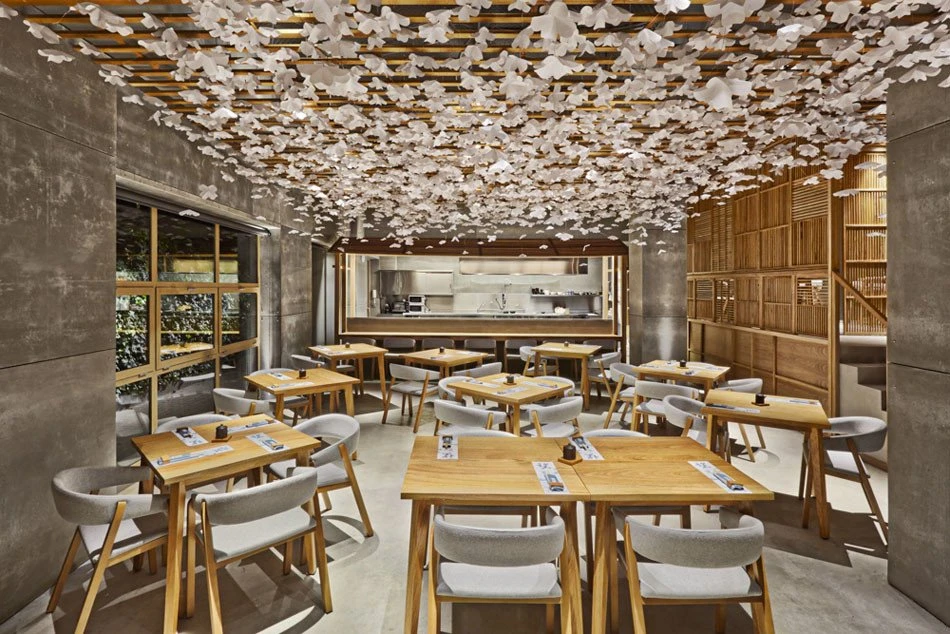
4. Atmosphere – if you have the budget, hire a professional interior designer with a reputation and restaurant design expertise. An appealing restaurant can instantly draw customers. How can your space be different from the rest? Will it be upscale casual? Sleek and modern?
The restaurant atmosphere comes from music, lighting, seating arrangements, noise levels and type of service. All of these elements must be balanced to suit your concept vision. A designer will be able to direct you to find that right balance.
5. Star Quality Chef – a renowned chef can attract customers. Landing an award-winning chef may be the key to surviving in a highly competitive area. A star-quality chef will understand menu development, cost, and quality. How many years of experience does your chef bring? What are their credentials? Is your chef’s name marketable?
Budget always plays a part when it comes to employing the right chef. If budgets do not permit, consider contacting a consultant who could offer a star chef for seasonal menu changes and PR activities. Savvy IQ (www.savvyiq.com) is a consulting company offering these services. There are many companies out there that could provide something similar.
6. Focused Offering – specialising in a particular item can build loyal customers and attract new ones. Do you offer something unique that no one else has? The most extensive wine cellar? Premium Japanese sake? Best lobster Brioche?
The likes of Burger & Lobster (www.burgerandlobster.com) have hit the nail. A unique concept that specialises in 2 items. Flat Iron (www.flatironsteak.co.uk) is another good example with only one product: a steak. Do it well and be creative; you do not need an extensive menu, just a good one.
7. Marketing Gimmicks – sometimes, a restaurant will implement a marketing strategy to create hype or exclusivity among guests who dine at their restaurant. The goal is to create a buzz and be the town’s talk. For example, as a Japanese restaurant, you could offer homemade soba noodles, which the only master soba maker develops in the city. The restaurant could offer these creations between certain hours, driving demand and creating a buzz.
Another example of someone doing a product amazingly is a concept in Tokyo offering the kakigori (shaved ice). Taiwan’s much-hyped Ice Monster shop in Omotesando, Tokyo, is such a success and buzz that you may have to wait up to five hours in a queue to get a crushed ice dessert. It offers Taipei-born flavours like coffee, ice and milk tea with tapioca pearls, complete with a texture resembling powder snow, which now has a global following.
Doing business in a saturated market is risky, but it doesn’t mean it’s impossible. Before jumping into a location, ensure you understand the market surroundings. Restaurants are among the most demanding businesses to operate. Draw up a plan and review the steps to set yourself apart.