
Opening a restaurant is one of the most exciting and demanding things you can do in business.
I’ve worked in hospitality for years, and if there’s one thing I’ve learned, it’s this: passion alone is not enough. You need strategy, resilience, and real-world knowledge. I’m not sharing this because I think I have all the answers. I’m sharing it because I have seen too many good people struggle unnecessarily in our industry. If this helps even one person avoid a misstep, then it’s worth it.
Let’s start with a key truth: there are two main routes to opening a restaurant, and which one you follow shapes everything that comes next.
Are you starting with a concept or with a location?
Understanding where you start is crucial. Both paths can lead to success, but they require different strategies.
Route 1: You have a concept or an idea
You already have an idea for a restaurant. You know the type of food, the vibe, the experience you want to create. Your next step is to develop this into a fully formed brand before you look for a location.
- Start mood boarding your concept and think cuisine, visuals, vibe.
- Draft a sample menu to start visualising the offer.
- Begin sketching out who your customer is: age, lifestyle, spend.
- Think about what kind of spaces this concept would thrive in.
Route 2: You have a location
You may have a site already and it might an opportunity that fell into your lap, or you inherited a space. Now your job is to develop a concept that fits the location and its surrounding market.
- Spend time in the neighbourhood. What do locals eat and when?
- What’s missing? Is it affordable breakfasts? Family-friendly evenings? Quick lunches for office workers?
- Tailor your menu, decor, and pricing to match what the area needs.
- Think about how to maximise the space’s potential. Can you use the front for grab-and-go and the back for dining?
💡 Pro Tip:
- A former laundrette with exposed pipes and zero kerb appeal? Might just be the perfect spot for a neighbourhood pizza joint, especially if there’s footfall from a nearby attractions like an indie cinema.
- A tired petrol station? Could be reborn as a beerhaus with fresh brews and bratwurst, if traffic patterns are right.
- An underused rooftop above a car park? Could turn into the city’s next summer hotspot, sunset DJs, frozen cocktails, and skyline views sell out fast.
Now here is the step-by-step guide to opening a restaurant
1. Create your business plan
A working business plan includes your mission, market analysis, competitive advantage, detailed budget, revenue projections, and operational plan. It’s not just for banks, it’s your roadmap.
Consider:
- Financial modelling with three scenarios (conservative, realistic, optimistic).
- Clearly outlined team roles and staffing plan.
- What success looks like in year one.
- And please, please, please, consider it may be loss making in the first 3 to 6 months and used this as a contingency
Worth Knowing: In one project, we ran the numbers for a 50-seat neighbourhood bistro aiming for two lunch sittings and one dinner turnover per day. With an average spend of £22, we needed to hit around 65 covers daily just to break even, once we factored in rent, staff, utilities, and food costs. By pacing service properly and keeping a close eye on spend per head, we projected profitability by month 10. The key was steady local footfall, tight controls, and a marketing strategy that didn’t rely on big spends just smart, consistent visibility.
2. Secure your funding
Calculate how much money you need to launch and sustain operations for 6–12 months. Explore funding options: loans, investors, grants, or crowdfunding. Present your business plan confidently to lenders or backers.
Consider:
- Adding a contingency buffer of 20–30%.
- The impact of seasonal dips in revenue.
- Your repayment timeline and expected cash flow.
Worth Knowing: I headed up a raise for a small concept where we needed to bridge a £75K gap on top of a £150K investment. We didn’t just ask for support; we made it personal. Backers got their names on a founder’s wall, invites to private events, access to secret menus, early tastings, and exclusive discounts and loyalty programs. It wasn’t just funding; it was about building a community that felt ownership from day one. That energy carried through the launch and well beyond
3. Find and assess your location (assuming Route 1)
Choose a site based on your customer base, visibility, accessibility, size, and ambience. Spend time observing footfall, local competition, and customer behaviour. Speak to neighbouring businesses.
Consider:
- Planning and licensing history of the unit.
- Ceiling height, kitchen extract options, natural light.
- Who your neighbours are and how that affects footfall.
Worth Knowing: A You might find a smart-looking site in a busy corporate district. Great footfall, surrounded by office blocks, with plenty of lunch traffic. On paper, it feels like a no-brainer. But spend a few days there. You might realise it’s packed Monday to Thursday, then drops off a cliff on Fridays after 3pm. Weekends? Dead. And if you’re thinking of a dinner-led concept, forget it. Most people head straight home after work. In a location like that, you’re better off building a strong weekday lunch offer, fast service, consistent quality, and maybe even pre-orders or office catering. Dinner trade might never pay off, and trying to force it could drain your resources.
4. Negotiate your lease
A lease is a legal commitment, so you need to get it right. Don’t just accept what’s offered.
Consider:
- Negotiating a rent-free fitout period.
- Checking for hidden service charges.
- Clarifying responsibilities for maintenance and repairs.
- Break clauses: Can you leave early if it doesn’t work out?
Worth Knowing: Let’s say you’ve found the right space, but the numbers are tight. Before you sign anything, negotiate. You might be able to agree on three months rent-free for the fit-out and another three months at half rent during your ramp-up period. One small operator we consulted for saved over £38,000 this way. Savings that went straight to the bottom line. Landlords often prefer a solid, long-term tenant over a quick win, especially if the unit’s been sitting empty. So, you just need to ask.
5. Design the space
The design sets the tone. It influences dwell time, Instagram-worthiness, and efficiency.
Consider:
- Lighting layers: ambient, task, and accent.
- Acoustic control: no one enjoys shouting over dinner.
- Aesthetics that reflect your concept.
- Durable materials for high traffic.
Worth Knowing: With both Bao & Bing and Alley Cats Pizza, the goal was to create spaces that felt authentic, warm, and a little bit unexpected, without overspending. I literally bought the future from eBay. Decorative pieces came from local markets, we reused and repurposed what we could, and reclaimed timber became a key design element. It wasn’t just about saving money, it told a story. Customers picked up on the details, and it gave the spaces a character that can’t be faked. You don’t need a big budget to make it work, just a clear vision and a bit of creativity.
6. Plan your kitchen and layout
The engine room of your restaurant needs precision planning.
Consider:
- Workflow: How does food move from storage to prep to pass?
- Safety and compliance: fire exits, ventilation, non-slip floors.
- Futureproofing: room for additional equipment as you grow.
Worth Knowing: In one project I consulted for, the galley kitchen was too tight to handle both prep and service efficiently. Instead of forcing it, we extended the bar area slightly and created a dedicated cold kitchen there. We only lost two covers, but the gain was huge, better kitchen flow, faster service, and a bit of visual theatre for guests. Cold dishes went out through the bar pass, hot food came from the galley, and the service team had a much smoother route. It turned a spatial constraint into a feature that actually enhanced the guest experience.
7. Work with architects and contractors
Your fit-out team can make or break timelines and budgets.
Consider:
- Seeking hospitality-specific experience.
- Agreeing milestones and penalties for delays.
- Requesting weekly site updates and sign-off stages.
Worth Knowing: In all my projects, staying on schedule has come down to one key decision: using contractors who’ve already delivered for high street hospitality. They know what matters, extraction systems, fire compliance, drainage layouts, kitchen ergonomics and they don’t need handholding. That experience means fewer surprises, faster turnaround, and no costly redesigns halfway through the fit-out. It’s tempting to go with the cheapest quote, but in this industry, a contractor who understands restaurant builds is worth their weight in gold.
8. Source equipment and materials
From ovens to teaspoons, this step is about balancing quality and cost.
Consider:
- Leasing vs buying (e.g. combi ovens, dishwashers).
- Supplier reliability and maintenance support.
- Warranty terms and delivery lead times.
Worth Knowing: From experience, sourcing ex-showroom kit or used equipment has been a game changer. You get access to high-spec equipment, often barely used, sometimes just demo models at a fraction of the cost. In one recent case, we saved over £60K without cutting corners on performance or warranty. The equipment was solid, available immediately, and installed ahead of schedule. That kind of saving gives you room to invest in things guests actually notice, like great lighting, stronger branding, or an opening team that’s properly trained.
9. Understand and apply for licences and permits
This is about compliance, not just bureaucracy.
Consider:
- Environmental Health registration (before you open).
- Alcohol licence: premises and personal licence holders.
- PRS/PPL if you plan to play music.
- Planning consent for signage, extraction, or outdoor seating.
Worth Knowing: Never underestimate how long licensing can take, especially your premises licence. Delays are common, and even one missing document or objection can push your opening back by weeks. Always build in buffer time for approvals and start the process early. It’s not just paperwork, your entire launch timeline, staffing, and marketing plan depends on it.
10. Hire your core team
People shape your culture and customer experience.
Consider:
- Hiring early to allow proper training.
- Looking beyond CVs—attitude and values matter.
- Creating a staff handbook and induction checklist.
Worth Knowing: Loyalty isn’t built with pay alone. In one concept, we offered equity shares to key team members who stayed beyond the first year. It created real buy-in, reduced churn, and built a culture of ownership from day one. Even small percentages can make a big difference in how people show up, especially in the early stages when every shift counts.
11. Develop your menu
Keep it tight, seasonal, and executable.
Consider:
- Balancing high-margin items (e.g. pasta, wine) with lower ones.
- Designing for consistency: fewer moving parts per dish.
- Integrating dietary options and allergen info.
Worth Knowing: At one point, I helped launch a modern Moroccan bistro where we deliberately kept the menu tight, just 12 core dishes and a weekly special. It wasn’t about doing less. It was about doing things properly. From slow-cooked tagines to smoky zaalouk, every item had a reason to be there. It made training easier, kitchen flow sharper, and stock management far more efficient. And guests appreciated the clarity, they didn’t feel overwhelmed, they felt confident. The tighter the menu, the more room we had to focus on flavour, storytelling, and consistency.
12. Source and test suppliers
Your suppliers affect cost, quality, and reliability.
Consider:
- Local vs national: weigh freshness against price.
- Building backup supply options.
- Testing delivery punctuality, responsiveness, and returns policy.
Worth Knowing: In one café I worked with, we partnered with a small local bakery that had a loyal following but no shopfront. Instead of just buying in their pastries, we made it a real collaboration, co-branded signage, joint social posts, even a few seasonal specials created together. It did more than just fill the pastry case. Their customers became ours, and vice versa. Footfall grew for both businesses, and the story behind the partnership gave people something to connect with. That kind of authenticity can’t be faked, and it travels fast by word of mouth.
13. Implement systems (POS, accounting, inventory)
Tech saves time, reduces waste, and provides insights.
Consider:
- Cloud-based POS systems with inventory control.
- Linking POS with accounting software for real-time margins.
- Digital HR tools for scheduling and compliance.
Worth Knowing: This has been a core focus for me across almost every business I’ve worked with over the past 10 years, and it’s only accelerating. The right tech stack can transform how a restaurant runs. I’m talking about integrated POS, live inventory tracking, cloud-based reporting, rota software that ties into payroll, tools that used to be expensive or clunky, but are now far more accessible. These systems don’t just save time; they prevent blind spots. You get instant visibility on margins, waste, staff efficiency, and sales trends. For smaller operators especially, the return on investment is huge. It means fewer surprises, faster decisions, and a business that’s built on real data, not gut feel alone. If you’re not using tech to drive your operation, you’re competing at a disadvantage. Full stop.
14. Build your brand assets and marketing tools
Branding is more than a logo, it’s how you make people feel.
Consider:
- Logo, colour palette, and typography.
- Photography style and tone of voice.
- Printed menus, packaging, signage, website, and socials.
Worth Knowing: Branding is much more than a logo, it’s how your space feels, how your staff speak, the tone of your social posts, even how your menu reads. It all adds up to the emotional response a guest has, often before they’ve even tried the food.
In one concept, we avoided the typical clean-cut, minimalist approach and leaned into something more tactile and characterful. We used layered textures, locally sourced ceramics, hand-painted signage, and menu language that felt conversational, almost cheeky. Everything was designed to feel human, not corporate. And it worked. People connected with the brand, shared it online, and remembered how it made them feel. That emotional memory is often what brings them back, not just the food.
15. Create a launch marketing strategy
Make sure people are excited before you even open the door.
Consider:
- Building email and SMS lists via teasers and competitions.
- Influencer previews and local food journalist outreach.
- Paid social ads with strong visuals and opening offers.
Worth Knowing: For one launch, we approached the build-up like a campaign. Countdown boards went up in the windows weeks before opening , no branding, just a date. It got people curious. On social media, we shared quick glimpses, a bit of lighting here, a dish being prepped there, just enough to create intrigue without revealing too much.
We created a secret menu that you could only access if you were following us online. You had to mention a phrase or flash a post to unlock it. It made people feel like they were part of something exclusive. We also sent out a handful of personal invites, carefully selected, not random influencer blasts. That first night, there was a queue. Not because we shouted, but because we’d built tension, loyalty, and a sense of discovery. That’s what real momentum looks like.
16. Run staff training and dry runs
Rehearse every scenario.
Consider:
- Full menu tastings and service drills.
- Realistic mock services with friends & family.
- Debriefs after every run: what went well, what didn’t?
Worth Knowing: During one soft launch, the mock service made something immediately clear, the pass was bottlenecking. Orders were piling up, tickets weren’t being called fast enough, and dishes were landing at tables out of sync. Instead of pushing through and hoping it would fix itself, we paused, re-evaluated the kitchen setup, and switched a few key roles around. It wasn’t a big restructure, just the right people in better positions. The difference was instant. Service flowed, timing improved, and the energy in the kitchen shifted. That’s the point of dry runs: not to prove you’re ready, but to expose the cracks while there’s still time to fix them.
17. Soft launch (friends, family, neighbours)
This is your chance to tweak and perfect.
Consider:
- Offering a discount in exchange for detailed feedback.
- Encouraging social sharing.
- Keeping your soft launch low-stakes to focus on systems.
Worth Knowing: When we launched Alley Cats Chelsea, we wanted to do something that would cut through the usual noise, something that would get noticed without shouting. So we designed fake parking fines and placed them on every car in the neighbourhood. At first glance, they looked like actual tickets, but inside was a personal invite and an exclusive opening offer. People went from confused to amused, and more importantly, they showed up. It was unexpected, hyper-local, and got everyone talking. That small bit of creativity built instant word-of-mouth and gave us a packed first week without spending big on traditional ads.
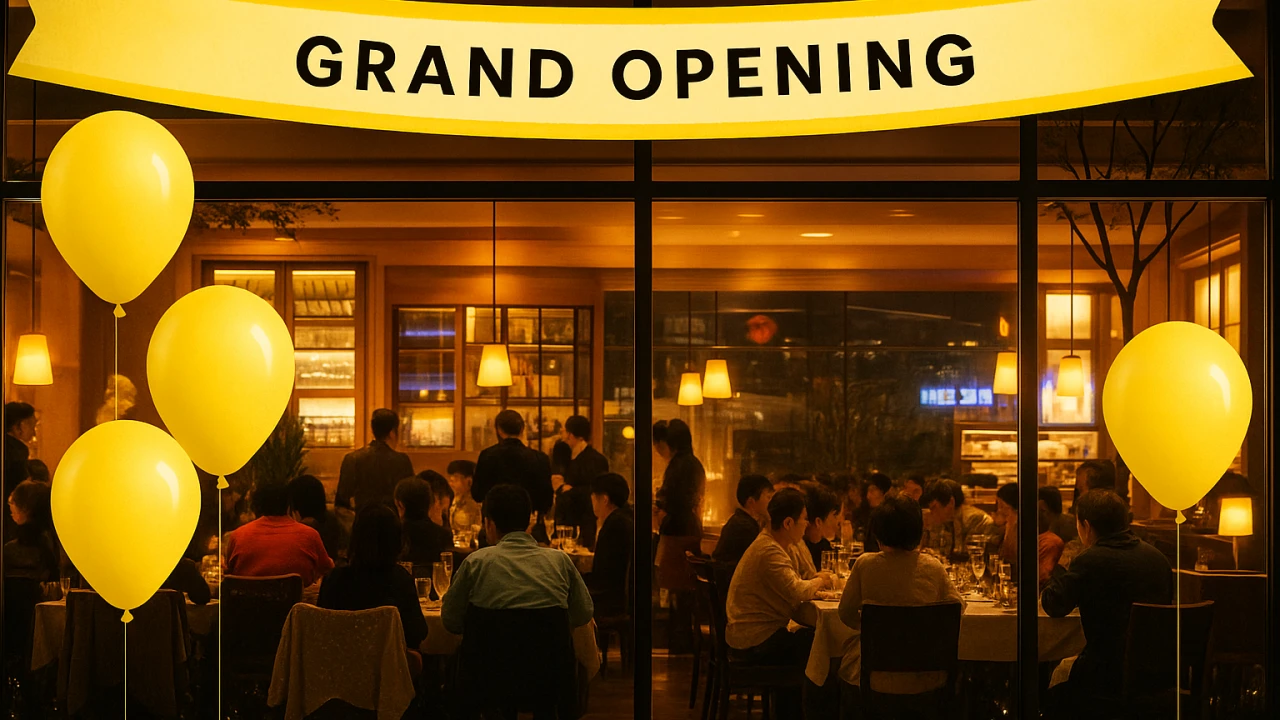
18. Grand opening and ongoing operations
This is day one of the real business.
Consider:
- Planning a quiet soft opening or a high-energy launch depending on your concept.
- Monitoring sales, customer feedback, and team morale from the start.
- Weekly reviews of what’s working and where to improve.
Worth Knowing: In one new venue, we noticed by week two that certain shifts were dragging. Long ticket times during midweek lunches, while weekends were overstaffed. Instead of guessing, we pulled the data from the POS and looked at hour-by-hour sales patterns. It was clear: the kitchen was stretched thin on Wednesdays and Thursdays but coasting during Sunday dinner. We shifted the rota, reinforced the midweek line, and saw service times drop immediately. That’s the value of tracking early, the patterns are there, but only if you’re looking.
The Bottom Line
Opening a restaurant is not just business—it’s personal. It’s sweat, tears, dreams, and long nights. It’s creating jobs, building community, and sharing joy through food.
I’m sharing this because I want more of us to succeed. If you’re thinking of launching your own place, I hope this gives you the clarity and courage to do it well.
Feel free to message me if you’re at the start of your journey. I don’t know everything, but I’ll always try to help.
Here are some other articles I’ve written that may also help:
1. How to Start a Restaurant A straight-talking piece about getting from idea to doors open.
2. Balancing Atmosphere and Food How design and vibe can elevate (or break) your food offering.
3. Developing a Concept: Blood, Sweat and Expertise Why concept development is where it all begins — and often ends.
4. Building a Restaurant With Purpose The internal work that goes into building something that lasts.
5. Building a Franchisable Restaurant: Lessons from Alley Cats What it takes to scale a concept without losing your soul.
6. Which Type of Restaurant Concept Is Right for You? A simple breakdown to help you match your vision with your reality.
7. Creating Your Restaurant Concept From spark to structure, giving your idea a heartbeat.